

Because your drink deserves
to taste like itself.
It's the reason every piece of VITRI glassware is made the way it is.
Plastic leaches chemicals into what it holds, slowly and often invisibly, including microplastics that can end up in your drink without any taste or smell to give it away. Metal is a safer choice, it won't leach the same way, but most metals are still reactive to some degree, and many people can taste it, a faint tang or tinny note, especially with acidic drinks like coffee, tea, or anything citrus. It's not a health concern the way plastic can be, it's a taste one.
Glass does neither. It's non-porous, so it doesn't hold onto flavor or odor the way porous materials can. A quick rinse with hot water is usually enough to bring a glass cup back to completely neutral, ready for something entirely different next. It's the one material that adds nothing and takes nothing away, which is why it's still the standard for anyone who cares about how their drink actually tastes.
Glass is also transparent. You can see your drink, its color, its clarity, whether it's properly chilled or steeped, part of why it still feels more considered than drinking from something opaque.

Glass vs. plastic
Plastic drinkware is lightweight and inexpensive, but it comes with a real tradeoff. Plastics can leach chemicals into what they hold, a process that speeds up with heat, acidity, or repeated use, and includes microplastics small enough to go completely undetected. Glass has none of this to worry about. It's chemically inert, so it never transfers anything into your drink, no matter how hot, how acidic, or how many times you use it.

Glass vs. metal
Metal is a step up from plastic in one important way, it doesn't leach the same chemical compounds. But metal is still a reactive material, and many people can taste that reactivity, especially with coffee, tea, or citrus. Glass doesn't react with anything it holds, so what you taste is only ever the drink itself.

What about silicone
and rubber?
Silicone and rubber often get treated as a safe stand-in for plastic, since they're commonly labeled food-grade. But they're still synthetic materials, and like plastic, they can absorb odor and flavor over repeated use. The bigger issue is where they sit. A gasket or O-ring creates a seam, a place where two materials meet, and that seam is exactly where residue and moisture tend to collect. Getting behind or underneath a gasket to actually clean it is difficult, and often impossible without disassembling the product entirely, so it's rarely done. Over time that adds up.
This matters because silicone is often where it hides. A lid, a gasket, an O-ring, these are the small components that let a product get marketed as "all glass" while the part that actually touches your mouth, or seals in your drink, isn't glass at all. It's easy to miss on a product page, since the body of the cup is the part shown in every photo.
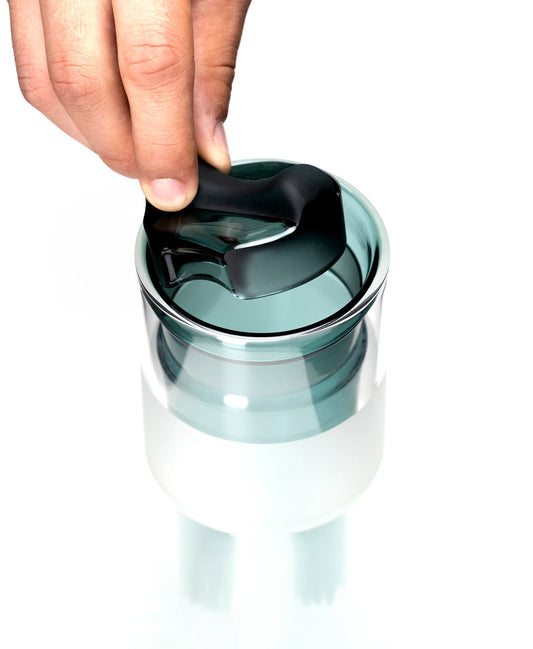
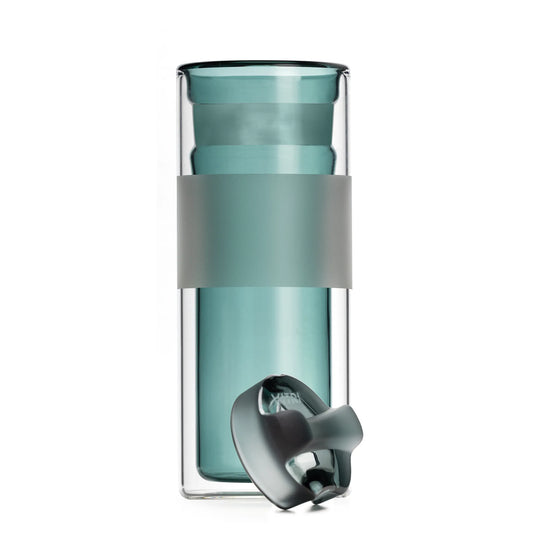
VITRI's lid is glass-to-glass, no silicone gasket, no rubber seal, so there's no seam to clean around and no hidden component to check for in the first place.

No gasket. No seam. Just glass.
What is borosilicate glass?
Borosilicate glass isn't just glass that's been treated or reinforced, it's a different formula entirely. Standard glass, the kind in most drinkware and windows, is soda-lime glass, made primarily from silica with soda and lime added to lower its melting point for easier manufacturing. Borosilicate glass replaces much of that soda and lime with boron trioxide, which changes how the glass behaves at a molecular level.
That single substitution is what gives borosilicate its defining property: a much lower rate of thermal expansion. Soda-lime glass expands and contracts significantly with temperature change, which is exactly why it's prone to cracking when it goes from hot to cold quickly. Borosilicate barely expands at all by comparison, so it can handle rapid swings in temperature that would shatter ordinary glass.
Borosilicate glass isn't new. It was developed in the late 1800s specifically to solve this problem for laboratory glassware, where a beaker might go from a flame to cold water in seconds.

That same durability is why borosilicate has since become the material of choice for premium drinkware and cookware, anything that needs to handle both heat and cold reliably, without weakening or clouding over time. It's more resistant to scratching and thermal stress than standard soda-lime glass, and it holds its clarity for the life of the piece.
VITRI uses borosilicate glass throughout our drinkware for exactly this reason: it's a material with a track record. The same properties that made it trustworthy in a laboratory a century ago are what make it trustworthy on your counter today.
See it in every VITRI product
Every piece of VITRI drinkware, tumblers, cups, straws, is made from the same borosilicate glass for the same reason: nothing added, nothing taken away, just the drink as it's meant to taste.
-
 Sold out
All-Glass Lidded Tumbler, 10oz, Aqua
Regular price $59.95 USDRegular price -
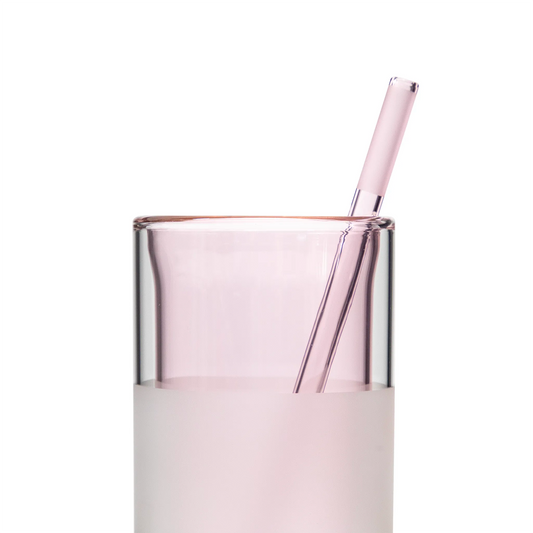
12oz Glass & Straw, 2 Sets, Rose
Regular price $49.95 USDRegular price -
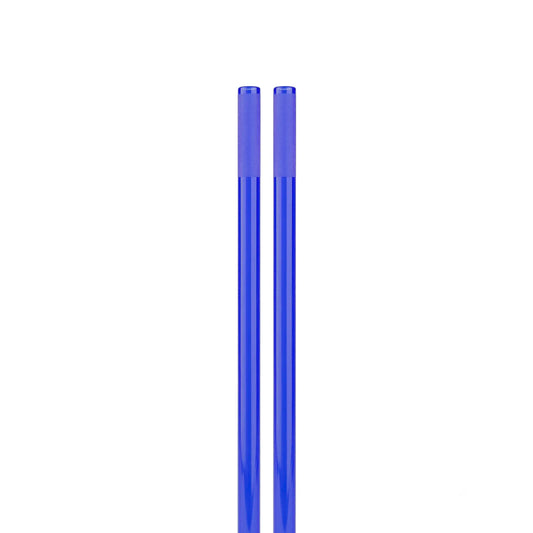
Cobalt Glass Straws 2 Pack
Regular price $14.95 USDRegular price


Frequently Asked Questions
Collapsible content
Is borosilicate glass safe?
Yes. Borosilicate glass is chemically inert, meaning it doesn't react with or leach into whatever it holds. It's the same material used in laboratory equipment where purity matters most.
Is glass better than plastic for drinking?
For taste and safety, yes. Plastic can leach chemicals, including microplastics, especially with heat or repeated use. Glass is non-porous and chemically inert, so nothing transfers into your drink.
Does glass hold onto flavors or odors?
No. Glass is non-porous, so it doesn't absorb flavor or odor the way some other materials can. A normal wash is enough to bring it back to neutral.
Is glass better than stainless steel for drinking?
It depends what you're optimizing for. Stainless steel won't leach chemicals, but many people can taste a faint metallic note from it. Glass is neutral, so it never affects the taste of what you're drinking.